After the Sale, Give Customers a Reason to Come Back
15 October 2026Your Business Card Should Start a Conversation
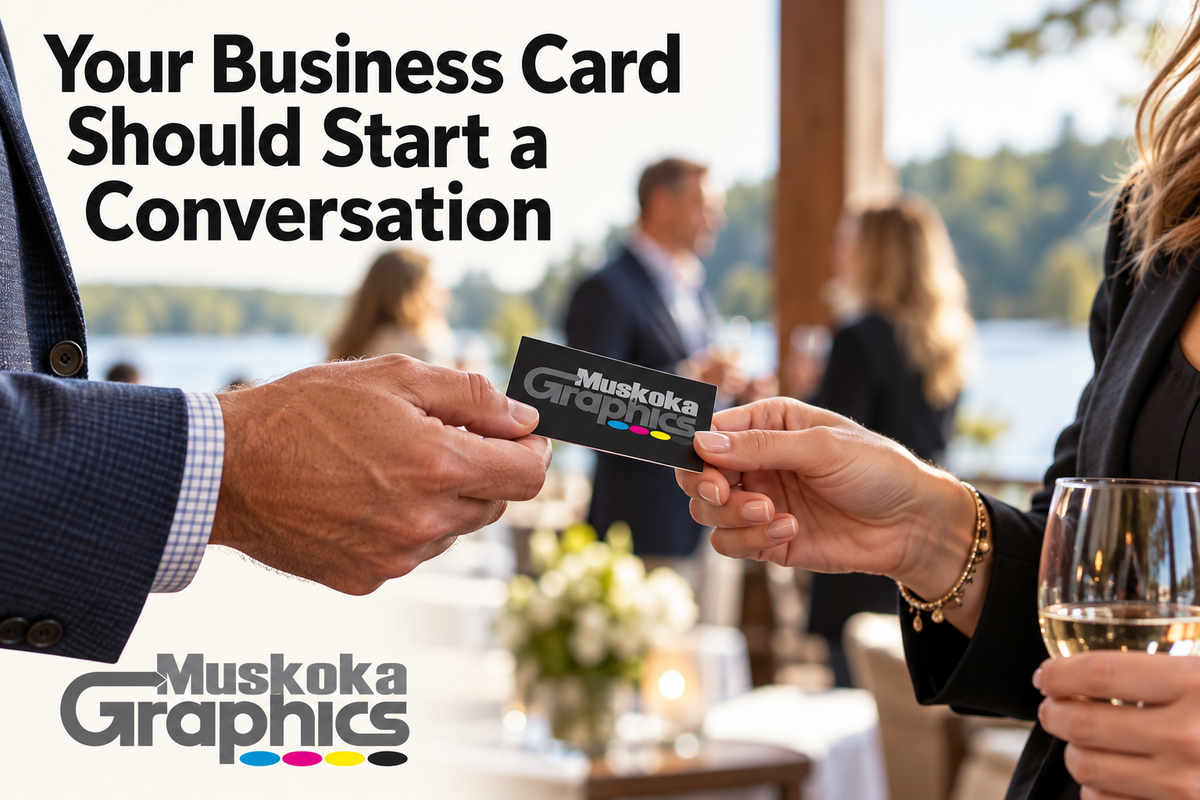
You meet someone who could become a customer, supplier, or referral partner. You have a good conversation, exchange cards, and move on. A week later, will your card help that person remember what you do and why they might call? A business card has limited space, but it can still do a useful job. It should connect the conversation you just had to an easy next step. That starts with deciding what the recipient needs, rather than filling every corner with information.
Make your work clear
A clever logo or job title may mean something to you and very little to a new contact. Include a plain description of the work people can hire you to do. “Custom decks and outdoor structures” gives someone a useful starting point. “Solutions for tomorrow” leaves them guessing. You do not need a full service list. Choose the description that best fits the conversations where you use the card, and make sure it matches the services on your website.
Give the important details room
Your name, business name, preferred contact details, and website should be easy to find. If visiting your location matters, include the address. If customers normally contact you by appointment, make that clear instead. Read the design at its actual printed size. Tiny type may look acceptable when you zoom in on a screen, then become frustrating in someone’s hand. Contrast, spacing, and a simple hierarchy usually help more than adding another decorative element.
Use the reverse with purpose
The back can carry a short promise, an appointment reminder, or a useful prompt to visit a specific service page. A QR code can make that visit easier, but give people a reason to scan it. Tell them whether they will see project examples, booking information, or a product guide. Keep a readable web address as well. Test the printed code on more than one phone before approving a full run, especially if it is small or placed over a photograph.
Match the card to the conversation
A tradesperson meeting homeowners may need different wording from a consultant meeting corporate buyers. That does not always require separate cards, but it does require thinking about the reader. Consider what you usually explain aloud and what people ask afterward. Avoid promises you cannot support, and use a photograph only if it helps the recipient recognize you or understand your work. The card should feel like the same business they encountered in person and will find online.
Proof the practical details
Before printing, check the phone number by calling it and the web address by typing it. Confirm the spelling of names and the email address. Look for details that might change soon. At Muskoka Graphics, we design business cards and other printed materials with their real use in mind. Choosing a finish and layout is easier when you know who will receive the card and how you expect them to respond.
Take the next step
Put your current card beside your website and ask whether a new customer would recognize the same business in both. If the connection is unclear, talk with Muskoka Graphics about a card that makes your next introduction easier.